

 摘要:
CatBoost:高效处理类别特征的梯度提升库 项目概述 CatBoost 是由 Yandex 开发的开源机器学习库,专门设计用于处理包含大量类别特征的数据集。它基于梯度提升决策树...
摘要:
CatBoost:高效处理类别特征的梯度提升库 项目概述 CatBoost 是由 Yandex 开发的开源机器学习库,专门设计用于处理包含大量类别特征的数据集。它基于梯度提升决策树... 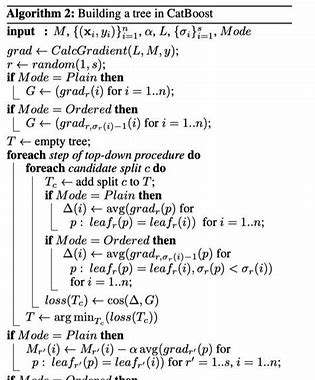
CatBoost:高效处理类别特征的梯度提升库
项目概述
CatBoost 是由 Yandex 开发的开源机器学习库,专门设计用于处理包含大量类别特征的数据集。它基于梯度提升决策树(GBDT)算法,通过创新的 Ordered Boosting 和类别特征处理技术,在保持预测准确性的同时显著提升了训练速度和模型质量。
核心特性
1. 卓越的类别特征处理
CatBoost 的核心优势在于其独特的类别特征处理方法: - 自动处理类别特征:无需手动进行独热编码或标签编码 - Ordered Target Statistics:使用基于时间顺序的统计方法,有效防止目标泄漏 - 支持高基数特征:能够高效处理具有大量不同取值的类别特征
2. 高效的训练算法
- Ordered Boosting:减少过拟合,提高模型泛化能力
- 对称树结构:加速预测过程,支持快速推理
- GPU 加速:全面支持 NVIDIA GPU,大幅提升训练速度
3. 丰富的功能
- 支持分类、回归、排序等多种任务
- 内置交叉验证和超参数优化
- 提供模型可解释性工具
- 支持 Python、R、命令行等多种接口
安装与配置
通过 pip 安装
text
pip install catboost
通过 conda 安装
text
conda install -c conda-forge catboost
从源码编译
text
git clone https://github.com/catboost/catboost.git
cd catboost
make -j 4  # 使用4个核心编译
基础使用示例
示例 1:分类任务
text
#include <catboost/catboost.hpp>
#include <iostream>
#include <vector>

int main() {
    // 准备训练数据
    std::vector<float> features = {1.5, 2.3, 3.7, 4.1};
    std::vector<std::string> categorical_features = {"A", "B", "A", "C"};
    std::vector<float> targets = {0, 1, 0, 1};

    // 创建数据集
    TPool pool;
    pool.Features = features;
    pool.CatFeatures = categorical_features;
    pool.Target = targets;

    // 配置训练参数
    TFullModel model;
    TLearnProgress learnProgress;

    // 训练模型
    TrainModel(
        TPlainJsonToString("{\"iterations\": 100, \"learning_rate\": 0.03}"),
        pool,
        TString(""),  // 测试集路径
        TString("model.cbm"),  // 模型保存路径
        &model,
        &learnProgress
    );

    // 进行预测
    std::vector<float> test_features = {2.0, 3.5};
    std::vector<std::string> test_cat_features = {"B", "A"};

    double prediction = ApplyModel(model, test_features, test_cat_features);
    std::cout << "预测结果: " << prediction << std::endl;

    return 0;
}
示例 2:使用 Python 接口
text
from catboost import CatBoostClassifier, Pool
import numpy as np

# 准备数据
train_data = np.random.rand(100, 10)
train_labels = np.random.randint(0, 2, size=100)
cat_features = [0, 1, 2]  # 指定哪些列是类别特征

# 创建模型
model = CatBoostClassifier(
    iterations=500,
    learning_rate=0.03,
    depth=6,
    loss_function='Logloss',
    verbose=100
)

# 训练模型
model.fit(train_data, train_labels, cat_features=cat_features)

# 进行预测
test_data = np.random.rand(10, 10)
predictions = model.predict(test_data)
pred_proba = model.predict_proba(test_data)

print(f"预测类别: {predictions}")
print(f"预测概率: {pred_proba}")
示例 3:处理真实数据集
text
from catboost import CatBoostRegressor, Pool
from sklearn.datasets import fetch_california_housing
from sklearn.model_selection import train_test_split
import pandas as pd

# 加载数据集
data = fetch_california_housing()
df = pd.DataFrame(data.data, columns=data.feature_names)
df['target'] = data.target

# 添加一些类别特征(示例)
df['HouseAgeGroup'] = pd.cut(df['HouseAge'], bins=5)
df['IncomeGroup'] = pd.cut(df['MedInc'], bins=5)

# 划分训练测试集
X = df.drop('target', axis=1)
y = df['target']
X_train, X_test, y_train, y_test = train_test_split(X, y, test_size=0.2, random_state=42)

# 指定类别特征
cat_features = ['HouseAgeGroup', 'IncomeGroup']

# 创建数据池
train_pool = Pool(X_train, y_train, cat_features=cat_features)
test_pool = Pool(X_test, y_test, cat_features=cat_features)

# 训练模型
model = CatBoostRegressor(
    iterations=1000,
    depth=8,
    learning_rate=0.05,
    loss_function='RMSE',
    eval_metric='RMSE',
    early_stopping_rounds=50,
    verbose=100
)

model.fit(train_pool, eval_set=test_pool)

# 评估模型
from sklearn.metrics import mean_squared_error, r2_score

predictions = model.predict(X_test)
mse = mean_squared_error(y_test, predictions)
r2 = r2_score(y_test, predictions)

print(f"均方误差: {mse:.4f}")
print(f"R² 分数: {r2:.4f}")
高级功能
1. 交叉验证
text
from catboost import cv

params = {
    'loss_function': 'Logloss',
    'iterations': 100,
    'depth': 6,
    'learning_rate': 0.1,
}

cv_data = cv(
    params=params,
    pool=train_pool,
    fold_count=5,
    shuffle=True,
    partition_random_seed=0,
    verbose=False
)

print(f"最佳验证分数: {cv_data['test-Logloss-mean'].min()}")
2. 超参数优化
text
from catboost import CatBoostClassifier
from sklearn.model_selection import GridSearchCV

model = CatBoostClassifier(verbose=0)

param_grid = {
    'depth': [4, 6, 8],
    'learning_rate': [0.01, 0.05, 0.1],
    'iterations': [100, 200, 500]
}

grid_search = GridSearchCV(
    estimator=model,
    param_grid=param_grid,
    cv=3,
    scoring='accuracy'
)

grid_search.fit(X_train, y_train, cat_features=cat_features)
print(f"最佳参数: {grid_search.best_params_}")
3. 特征重要性分析
text
# 获取特征重要性
feature_importance = model.get_feature_importance(train_pool)
feature_names = X_train.columns

for feature_name, importance in zip(feature_names, feature_importance):
    print(f"{feature_name}: {importance}")

# 可视化特征重要性
import matplotlib.pyplot as plt

plt.figure(figsize=(10, 6))
plt.barh(range(len(feature_importance)), feature_importance)
plt.yticks(range(len(feature_importance)), feature_names)
plt.xlabel('特征重要性')
plt.title('CatBoost 特征重要性分析')
plt.show()
性能优化技巧
1. GPU 加速
text
# 启用 GPU 训练
model = CatBoostClassifier(
    iterations=1000,
    task_type='GPU',  # 使用 GPU
    devices='0:1',    # 使用第一个 GPU
    learning_rate=0.05,
    depth=10
)
2. 内存优化
text
# 使用低精度模式节省内存
model = CatBoostClassifier(
    iterations=1000,
    leaf_estimation_iterations=10,
    boosting_type='Ordered',  # 减少内存使用
    max_ctr_complexity=1      # 限制特征组合复杂度
)
3. 早停机制
text
model = CatBoostClassifier(
    iterations=5000,  # 设置较大的迭代次数
    early_stopping_rounds=50,  # 50轮没有改进则停止
    od_type='Iter',  # 过拟合检测器类型
    od_wait=20       # 等待20轮
)
实际应用场景
1. 点击率预测(CTR)
text
# 电商推荐系统中的CTR预测
ctr_model = CatBoostClassifier(
    iterations=2000,
    depth=8,
    learning_rate=0.03,
    loss_function='Logloss',
    eval_metric='AUC',
    cat_features=['user_id', 'item_id', 'category', 'brand'],
    verbose=100
)
2. 金融风控
text
# 信用评分模型
risk_model = CatBoostClassifier(
    iterations=1500,
    depth=6,
    learning_rate=0.02,
    loss_function='Logloss',
    scale_pos_weight=10,  # 处理不平衡数据
    cat_features=['occupation', 'education', 'marital_status']
)
3. 医疗诊断
text
# 疾病预测模型
medical_model = CatBoostClassifier(
    iterations=1000,
    depth=5,  # 较浅的深度防止过拟合
    learning_rate=0.01,
    l2_leaf_reg=3,  # 正则化
    cat_features=['symptom', 'medication', 'family_history']
)
最佳实践建议
- 数据预处理:虽然 CatBoost 能自动处理类别特征,但仍需确保数据质量
- 参数调优:合理设置学习率、树深度和迭代次数
- 监控训练:使用验证集和早停机制防止过拟合
- 特征工程:尝试创建有意义的特征交叉组合
- 模型解释:利用 SHAP 值等工具理解模型决策过程
总结
CatBoost 凭借其卓越的类别特征处理能力、高效的训练算法和丰富的功能集,已经成为处理现实世界数据(特别是包含大量类别特征的数据)的首选工具之一。无论是学术研究还是工业应用,CatBoost 都能提供出色的性能和易用性。
通过合理的参数配置和最佳实践,CatBoost 可以在保持高预测准确性的同时,显著减少特征工程的工作量,是机器学习工程师和数据科学家工具箱中不可或缺的利器。
项目资源: - 官方文档:https://catboost.ai - GitHub 仓库:https://github.com/catboost/catboost - 示例代码:https://github.com/catboost/tutorials - 社区支持:Stack Overflow 和 GitHub Issues
catboost_20260205121150.zip
类型:压缩文件|已下载:0|下载方式:免费下载
立即下载








还没有评论,来说两句吧...